What Does It Mean to Be Fit? A Real Answer for Real People
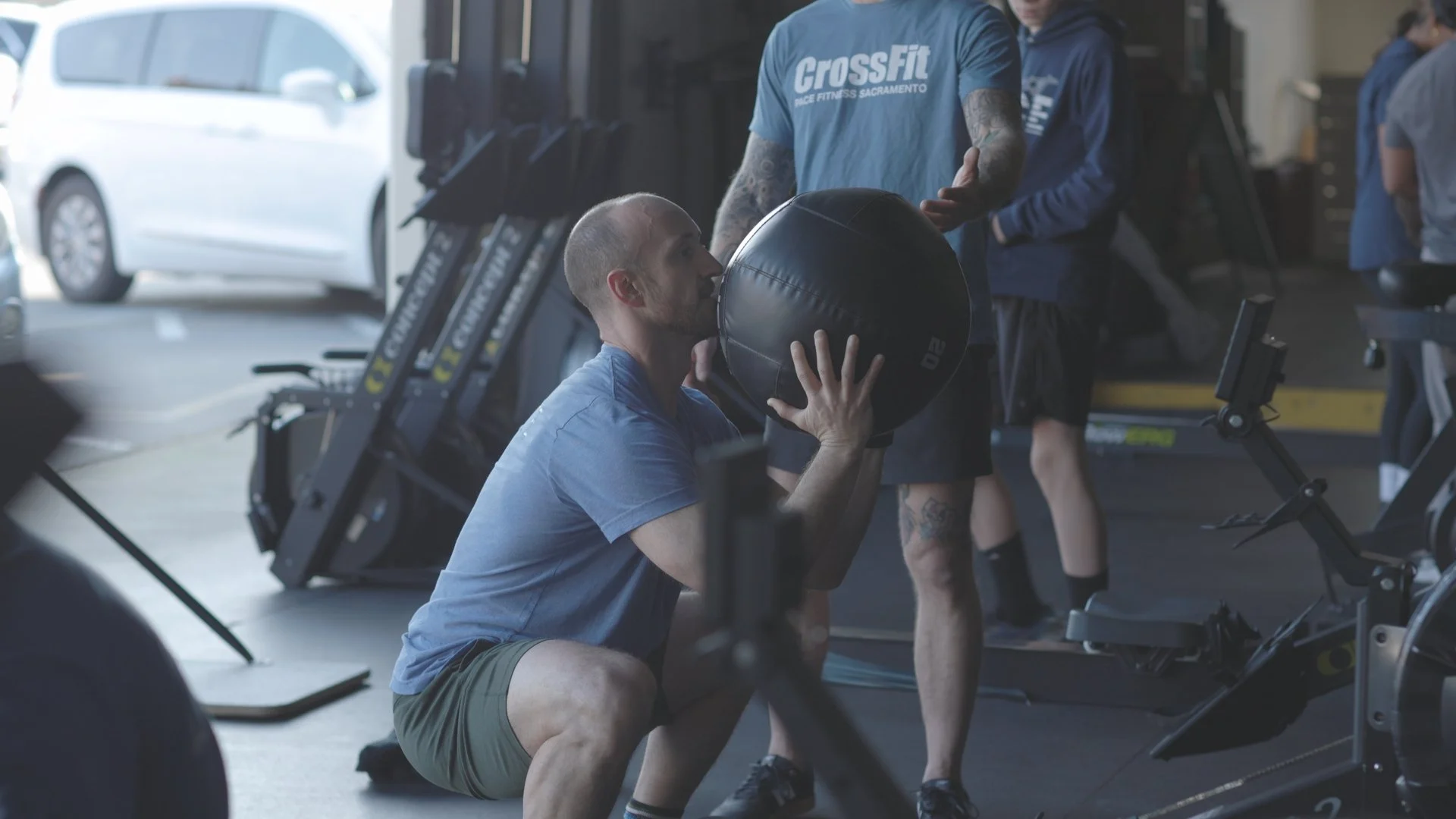
Most people define fitness by how they look. That definition is costing them real progress — and real health.
Fitness is your body's ability to perform physical work across multiple dimensions: strength, endurance, mobility, power, and recovery. It has nothing to do with how you look and everything to do with what your body can actually do.
If you've ever finished a workout and thought, 'I should be further along by now' — that feeling often comes from chasing the wrong definition of fitness.
When fitness is about appearance, progress is invisible. When it's about capacity — what your body can lift, sustain, recover from, and move through — progress becomes measurable. Real. Yours.
Let's break down what fitness actually means, what the research says about realistic standards, and how to know whether you're genuinely moving in the right direction.
Why Your Definition of Fitness Determines Your Results
Here's the problem with defining fitness as a look: you can never quite measure whether you've achieved it. The goalposts move. You lose weight and want to lose more. You get leaner and find something else to fix.
This isn't a discipline problem. It's a definition problem.
When fitness is redefined as capacity — what can your body do? — everything changes. You have objective benchmarks. You can measure them. You can see progress even when the mirror isn't cooperating. And you start making decisions based on performance rather than appearance.
This is exactly how we approach fitness at Pace CrossFit in Sacramento. Not: how should you look? But: what should your body be capable of?
A 2023 study in the British Journal of Sports Medicine found that muscle strength and cardiorespiratory fitness were stronger predictors of mortality than BMI — suggesting that what your body can do matters far more to health outcomes than what it looks like.
What Are the True Components of Physical Fitness?
Complete fitness has five interconnected dimensions. Neglecting any one of them leaves you with gaps — not just in performance, but in long-term health.
1. Cardiovascular Endurance
This is your heart and lungs' ability to deliver oxygen to working muscles over sustained effort. It's what determines whether you can run for a bus without gasping, hike a trail without stopping every five minutes, or play with your kids without running out of steam.
Cardiovascular endurance declines rapidly with inactivity and improves reliably with consistent training. It's also one of the most powerful predictors of long-term health — people with high aerobic fitness have dramatically lower rates of heart disease, stroke, and all-cause mortality.
2. Muscular Strength
Strength is the ability to produce force against resistance. It's what allows you to pick things up safely, carry heavy groceries, move furniture, and maintain physical independence as you age.
A simple benchmark: a truly fit person can deadlift their own bodyweight. That's not an elite standard — it's a functional one that reflects a body prepared for the physical demands of real life.
After age 30, adults who don't train for strength lose roughly 3–8% of their muscle mass per decade. After 50, that rate accelerates. Building strength now is an investment in who you'll be at 60, 70, and beyond.
3. Body Composition
Body composition refers to the ratio of fat mass to lean mass in your body. It's a far more meaningful health metric than body weight alone, because two people can weigh exactly the same and have completely different health profiles.
Research-based healthy ranges: women below 20% body fat, men below 17%. These aren't extreme targets — they're markers of a body that has adequate lean mass and isn't carrying excessive metabolic burden.
You can be at a 'normal' weight and have poor body composition. You can be technically 'overweight' by BMI and have excellent metabolic health. This is why we use InBody scanning at Pace rather than relying on a scale.
4. Mobility and Flexibility
Mobility is your joints' ability to move through their full intended range of motion under active control. Flexibility is your muscles' ability to lengthen. They're related but not the same — and both matter.
You need enough mobility to squat, hinge, press, and move safely through everyday life. Lose it, and you compensate. Compensate long enough, and you get injured. Mobility is maintenance — not optional.
5. Recovery Capacity
How quickly does your body bounce back between training sessions and physical demands? Recovery capacity — which depends on sleep quality, nutrition, stress levels, and training age — determines how much you get from each workout and how sustainable your training is over months and years.
Poor recovery isn't just inefficient. Chronically undertreated recovery leads to declining performance, increased injury risk, and burnout — even in people who are doing everything else right.
What Are Realistic Fitness Standards for Adults?
The following benchmarks aren't elite-level goals. They're evidence-informed markers of a body that's well-prepared for the demands of life. Think of them as checkpoints on a spectrum, not a pass/fail test.
Deadlift your own bodyweight — tests functional strength and movement mechanics
Run a mile continuously at a comfortable pace — tests basic cardiovascular conditioning
20+ push-ups for men, 10+ for women — tests upper body and core endurance
Squat to full depth without heels rising or knees collapsing — tests mobility and strength together
Body fat below 20% (women) or 17% (men) — a metabolic health marker, not just aesthetics
Hang from a pull-up bar for 30+ seconds — tests grip, shoulder health, and upper body endurance
Get up from the floor without using your hands — a meaningful functional independence marker
Don't let these benchmarks overwhelm you. Most people who train consistently for 12 months will hit most of these. They're a direction, not a barrier to entry.
Is Fitness a Fixed Point or a Moving Target?
Fitness is a spectrum, not a destination. You are always somewhere on it — and you can always move further along it, regardless of your age, starting point, or how long you've been away.
This is one of the most liberating things to understand about fitness. There's no arriving. There's no moment where you've 'made it' and can stop. The goal is ongoing movement in the right direction — and that's entirely within your control, starting today.
We have members at Pace who started in their 30s feeling like beginners and are now in the best shape of their lives in their 40s. We have members who started in their 60s and are training better at 70 than they were at 55. The spectrum doesn't have an age limit.
How Does Pace CrossFit Sacramento Assess Fitness?
When you join Pace, we don't start with a look at what you weigh. We assess what your body can do.
That means looking at how you move under load — do your knees track properly in a squat? Does your spine stay neutral in a deadlift? Can you press overhead without flaring your ribcage? These are movement quality assessments that reveal what needs work and what's already strong.
We also use InBody scanning to track body composition over time — giving you actual data on muscle mass, body fat percentage, and hydration status. Because when you have real data, you make real decisions instead of guessing.
Every training decision we make is tied to these assessments. Your program is designed around your capacity — and it grows as your capacity grows.
Common Misconceptions About Fitness
'I need to lose weight before I start training.'
This is one of the most common things we hear from new members — and one of the most counterproductive. Training is what changes your body composition. Waiting until you're 'ready' means waiting to do the thing that would actually get you there. You start where you are. That's the only option.
'If I'm not sore, I didn't work hard enough.'
Soreness (DOMS — delayed onset muscle soreness) is a signal that your body encountered a new stimulus. As you become more conditioned, you'll be sore less often even while training effectively. Absence of soreness is not failure — it's adaptation.
'Cardio is for fat loss, lifting is for building muscle.'
Both do both. Strength training has a significant effect on fat loss through increased resting metabolic rate and post-exercise calorie burn. Cardio supports muscle health through improved circulation and recovery. The most effective body composition changes come from combining both — which is exactly what CrossFit programming at Pace does.
'I'm too old to get fit.'
The research says otherwise. Strength, endurance, and mobility all respond to training at any age. The timeline may be longer and the approach more deliberate, but the adaptation is real. Our Forever Fit program exists specifically for members 55+ who are serious about their health — and the results speak for themselves.
How Long Does It Take to Get Fit?
This depends enormously on your starting point, training frequency, sleep, and nutrition. But here are realistic timelines:
2–4 weeks: Improved energy, better sleep, reduced stress — neurological and hormonal adaptations happen fast
6–8 weeks: Noticeable changes in strength, endurance, and how clothes fit
3–6 months: Meaningful body composition changes visible in the mirror and measurable on InBody
12 months: Deep fitness base — you're a different athlete than you were. Strength is up, capacity is broader, and the habits are established
The most important thing to understand: fitness compounds. Every month of consistent training builds on the last. The athletes at Pace who've been with us for two or three years didn't get there in a sprint — they got there by showing up consistently, month after month.
Frequently Asked Questions About Fitness
What's the difference between being healthy and being fit?
Health refers to the absence of disease and adequate function of your body's systems. Fitness refers to your body's capacity to perform physical work. They overlap significantly — fit people tend to have better health markers — but they're not identical. You can be healthy without being particularly fit, and you can be quite fit while managing a chronic health condition.
Can you be fit at any body size?
Yes — to a meaningful extent. Body composition matters for health, but strength, endurance, and mobility can exist at a wide range of sizes. Research increasingly shows that fitness level is a more important predictor of health outcomes than body size alone. That said, body composition is one of the five components of fitness, so it's part of the complete picture.
How do I know if I'm getting fitter?
Track performance, not just appearance. Are you lifting more than you were 6 weeks ago? Finishing workouts faster? Recovering more quickly? Are your InBody numbers showing more muscle and less fat? These are the real signals. If the answer is yes to most of these, you're getting fitter — regardless of what the scale says on any given morning.
Is CrossFit the best way to get fit?
CrossFit is the most complete general fitness methodology available — designed to develop all five components simultaneously through constantly varied programming. That makes it the most efficient path to well-rounded fitness for most people. It's not the only path. But it's the one we've chosen at Pace because the evidence and outcomes consistently support it.
Ready to find out where you are on the spectrum — and start moving?